Site Search
- resource provided by the Forum Network Knowledgebase.
Search Tip: Search with " " to find exact matches.
The New Jersey Historical Commission board has approved $5.2 million in Fiscal Year 2026 (FY 26) grant funding benefitting 93 historical organizations, museums, historic sites, archives, libraries, individuals, and county re-grant agencies across the state.
The $5.2 million in FY 26 funding will support the New Jersey Historical Commission’s General Operating Support (GOS) program, which covers an array of operational expenses for qualified history organizations; Projects and Co-Sponsored Projects, which includes New Jersey-based historical research, exhibits, programs, and archival work; and the County History Partnership Program (CHPP), which provides all 21 counties with funding for local history groups statewide.
The funding for FY 26 takes on even greater importance as the state’s history community plans and prepares programming for the upcoming America 250th commemoration in 2026.
“From promoting civic engagement, expanding economic vitality, and broadening the knowledge of the state’s exceptional cultural resources, this funding strengthens that commitment by providing critical support to advance awareness of New Jersey’s past,” noted Lt. Governor Tahesha Way, who oversees the NJHC in her role as Secretary of State. “The result will be a strong, inclusive, and proactive history community ready to maximize its programmatic impacts for the 250th in 2026.”
It’s summer – and that means summer reading! Whether you’re reading at home or in the coffee shop, at the beach, or while traveling by train or airplane, I'm thrilled to share a collection of summer reading recommendations from CNJG’s Board of Trustees and staff. While some recommendations speak directly to philanthropy and the social sector, others explore leadership, civic engagement, economics, and personal growth, all offering insights and ideas to excite our curiosity and inspire us.
Board Chair Craig Drinkard has been re-reading the timeless classic Good to Great by Jim Collins. Craig shared that so much more is resonating this time around as he re-reads it. The first time he read the book, the theory is what stood out; this time it’s deeper, more strategic, and thought provoking, with fresh insights gained during this second look. This book is worth a read for everyone dedicated to leadership and organizational improvement.
First Vice Chair, Justin Kiczek continues to be inspired by our recent convening, 2025 Conference for the Social Sector - Stronger Together: Philanthropy & Civic Engagementand recommends Habits of Heart and Mind: How to Fortify Civic Culture from Our Common Purpose - a publication he says has been a "continued source of wisdom and good ideas" and passes on to pretty much anyone he knows! He also follows two Substack columns focused on civic culture and renewal: Daniel Stid’s The Art of Association and Gabe Lerner’s Democracy Notes.
Treasurer Catherine Wilson has been diving into a diverse reading list including Autocracy, Inc.by Anne Applebaum, The Art of More: How Mathematics Created Civilization by Michael Brooks, and The Heat Will Kill You First: Life and Death on a Scorched Planet by Jeff Goodell.
Also from our board members:
Paul DiLorenzo is catching up on his back-dated New Yorker magazines and especially loved a story called Amelia Earhart’s Reckless Final Flights.
Maisha Simmons recommends checking out this insightful blog post: The Challenge and Opportunity for Funder and Nonprofit Listening Right Now.
Tammy Rice Herman has been reading the weekly blog, "Better Allies" where author Karen Catlin shares five simple actions each week to create a more inclusive and engaging workplace. You can sign up here to receive the blog every Friday.
Margarethe Laurenzi recommends listening to Ann Patchett at Parnassus Books talk about all the great books being written that serve as a rebuttal to the idea that literary fiction has lost its way.
Jasmyne Beckford has been enjoying reading Choosing Purposeful Alignment: The Messy Middle of Transformation. The book really speaks to her, “because it’s all about how growth happens in that uncertain, messy middle where you have to keep choosing what aligns with your values.”
Lucy Vandenberg’s summer reading and all year round includes her “daily devouring of The New York Times and NJ Spotlight!”
The CNJG team has a few reading recommendations for you too!
Senior Director, Member Experience, Craig Weinrich recommends Doughnut Economics by Kate Raworth, who argues that GDP should no longer be the sole indicator for a nation’s (and the world’s) economic health. Measuring something as complex as an economy needs an updated tool – thus the doughnut model that includes social and ecological benefits and harms, resulting from economic activity.
Manager of Programs and Learning, Chanika Svetvilas is currently reading Systemic: How Racism Is Making Us Sick by Layla Liverpool. She notes Liverpool's observation that “Racism is an insidious threat to our health precisely because it is so easily overlooked or, in some cases, perhaps willfully ignored.”
Manager of Communications Shakirat Odunsi picked up two books at United Philanthropy Forum’s UnConference last month: Future Good: How to Use Futurism to Save the Worldby Trista Harris and A New Era of Philanthropy by Dimple Abichandani. These picks reflect her interest in how our sector can evolve and adapt. Harris's work explores how futurist thinking can be applied to social change, while Abichandani's book examines the transformation happening in philanthropic practices and approaches. Both seem perfectly timed for those of us thinking about where philanthropy is headed next.
For my own summer reading, I've been reassured by reading Who is Government? The Untold Story of Public Service edited by Michael Lewis – the stories of the real women and men working in the public sector without bravado and bluster. These are the civil servants that oversee our veterans’ cemeteries, explore our universe, hunt down cyber criminals and preserve our archives. These unsung heroes do the daily, unseen, yet necessary work of the people. “Although they often go unnoticed, public servants are the heartbeat of our nation.”
I also recently read, Meditations for Mortals - Four Weeks to Embrace Your Limitations and Make Time for What Counts by Oliver Burkeman. I plan on re-reading it so I can gain some deeper insights during my upcoming sabbatical.
Yes – that’s correct - I will be on sabbatical beginning Monday, August 11, and will return to the office on Tuesday, October 14! I started my journey at CNJG in May 2008. I’m grateful to the CNJG Board of Trustees for giving me this opportunity, and grateful to an incredibly dedicated and competent team that will ensure work of the Council continues during my absence! Thank you!
Special thanks to Craig Weinrich, who will be the senior executive in charge, while I am on sabbatical. Please feel free to reach out to Office Manager Dana Schwartz, as well, at [email protected].
I'm struck by the breadth and depth of what our community is reading, from civic engagement and economic models to health equity and the future of philanthropy. These recommendations reflect the commitment to continuous and shared learning that makes our CNJG community so special. I’m looking forward to exploring some of these recommendations during my time away. And in case you missed it, the annual CNJG 2024 President's Report also celebrates what makes our CNJG community so special!
With appreciation,
Theresa Jacks, President and CEO
Council of New Jersey Grantmakers
A Framework for Change
The Doing Good Better Steering Committee encourages funders to focus on and advocate for four (4) changes that can make an immediate difference in addressing power dynamics between nonprofits and funders and maximizing nonprofit impact. These goals are aligned with Trust Based Philanthropy, and are interdependent; when combined, they foster equity and a spirit of mutual trust between grantmakers and nonprofit partners. For more details about a specific goal, click on its individual goal link below.
• Goal 1: Center Equity
• Goal 2: Provide Flexible Funding
• Goal 3: Provide Reliable Funding
• Goal 4: Reduce Paperwork Burden
Self-Assessment/Reflection Tool for Funders
Philanthropy and Nonprofits for Greater Impact: The “Doing Good Better” Blueprint Video
The Provident Bank Foundation announced the recipients of its inaugural Empowerment Grant cycle.
PBF’s Board of Directors has approved 41 multi-year grants totaling $515,000 in funding annually to support the missions of nonprofit organizations in New Jersey, New York, and Pennsylvania. Empowerment Grants range from $5,000 to $20,000 per grant and will be automatically renewed at the same level in 2026.
Projects funded by these grants align with PBF’s priority areas of education, human services, and workforce development, and their corresponding areas of interest that include community colleges, vocational programs, special education services, housing assistance, food security, health-care access for uninsured and underinsured individuals, youth mental health, job training, employment supports, and reentry programs.
“This is the first year of our Empowerment Grant program, which emerged from The Provident Bank Foundation’s recent strategic revisioning process focused on advancing equity and inclusion,” says Samantha Plotino, vice president and executive director of The Provident Bank Foundation.
The NextGen Giving Circle of the Princeton Area Community Foundation awarded $27,500 in grants to three local nonprofits for a children’s school day breakfast initiative, a workforce program for high school boys, and job training for teens and adults.
At Every Child Valued’s breakfast program, the grant will be used in part to help offset the cost of groceries. At the Father Center, the grant will help pay for field trips and test fees for boys enrolled in an employment and credentialing program. At RISE, the grant will help fund workforce training for its thrift store staff.
“I founded NextGen with the goal of inspiring and developing the next generation of philanthropic leaders in our community,” said Jeremy Perlman, who created the fund in 2017. “The giving circle brings together like-minded young professionals to learn how nonprofits are addressing key issues facing individuals and families in the greater Trenton area, and to make a bigger impact than any one of us could on our own.”
The Summit Foundation is proud to announce the awarding of over $185,000 in scholarships to more than 60 students in the Summit, NJ area this year, empowering them to pursue higher education.
Every year, the Foundation partners with generous donors to provide financial support that helps students cover not only tuition but the many other costs of college life, such as books, dorm supplies, and living expenses. This support allows students to attend schools of their choice, to live on campus, and to take on fewer student loans.
“Before I even applied to colleges, I remember how afraid I was of not being able to afford an education after high school,” shared April Sanchez, a rising senior at Gettysburg College and recipient of the Elevating Summit Students Scholarship. “Never did I imagine how many resources there were for people like me. With pride, I say today that because of foundations like these, I have traded my fears for hope and gratitude... Not only am I a better friend, daughter, student, employee, and overall person, but I am also an even more hopeful and driven person than I was before.”
Rising Tide Capital (RTC), a prominent New Jersey-based entrepreneurship training organization, has received a transformative three-year, $1.5 million grant from the Geraldine R. Dodge Foundation to catalyze the nonprofit’s programmatic expansion in Trenton and throughout New Jersey. This award, approved by the Foundation’s Board of Trustees, will provide $500,000 annually to advance RTC’s impactful entrepreneurship education and workforce development initiatives catering to historically marginalized communities.
The Dodge Foundation’s strategic investment will bolster entrepreneurship education centered on high-opportunity licensed, credentialed, and certified career pathways. It will also provide comprehensive one-on-one technical assistance, resilience coaching, and tailored business support to entrepreneurs. Furthermore, the grant will fund strategic innovation projects that integrate RTC’s established programs with statewide partners, thereby significantly expanding the reach and accessibility of services to underserved communities throughout New Jersey.
The NPL led a multi-year, cross-sector effort to explore, plan, and execute a guaranteed income pilot in Newark in partnership with Mayors for a Guaranteed Income and the Center for Guaranteed Income Research. On June 17, we hosted a community unveiling of the pilot’s results and laid out next steps. The NPL continues to work on the intersection of cash policy and economic stability and resilience.
One of our longest and most successful public-private partnerships in Newark, the Summer Youth Employment Program empowers youth each year with a job, workforce training, financial literacy, and coaching and mentoring. Thanks to the support of more than 15 funding partners, we were able to employ just over 2,000 youth in 2025 and raised over $3 million. Newark SYEP is the biggest summer program in New Jersey thanks to the collaborative leadership of the Liaison.
Newark Philanthropic Liaison, Kevin Callaghan, was featured on an episode of Newark Today on WBGO with Sukhi Samra, Executive Director of Mayors for a Guaranteed Income, to discuss the results of the Newark Movement for Economic Equity.
The Newark Philanthropic Liaison led a two-year process to develop a municipal economic empowerment blueprint that brings all sectors together in Newark to support resident’s financial health. The resulting document created a financial empowerment continuum that calls on the implementation of a tiered approach that focuses on helping residents stabilize, sustain, and secure their wealth over time. The document was created with grant funds from Cities for Financial Empowerment and in close coordination with the United Way of Greater Newark’s Asset Building Coalition.
These news articles show our members responses to philanthropy's role in fighting against racism and injustice. If there items we've missed, please email us, and we'll add it.
Actions and Announcements
Johnson & Johnson: A Message from Johnson & Johnson Chairman and CEO Alex Gorsky About Recent Events in the United States
Robert Wood Johnson Foundation: Statement from Richard Besser, MD, on Racial Injustice, Violence, and Health In America
Adam Liebling, Director of Grants Management at RWJF, pens this article re-imagining the work of philanthropy
New Jersey Council for the Humanities: Our resolute commitment to equity and justice through the humanities
Overdeck Family Foundation: Standing in Solidarity, and Lifting Up Stories of Impact
Princeton Area Community Foundation: Eleanor Horne and Jeff Vega pen this opinion piece about how they are working towards racial equity and making their community “a better place for all children”
Smith Family Foundation: Protest and Planning Next Step - A Letter to our City and her Allies
TD Bank: A statement on recent events from Bharat Masrani, President & CEO, TD Bank Group
United Way of Ocean and Monmouth Counties: United We Stand
Victoria Foundation: Statement of Condemnation

These articles are curated from news sources, philanthropic-focused publications, philanthropy serving organizations, and other places found on the internet. We encourage philanthropic organizations to read, share, and use the strategies suggested in these articles for your own diversity, equity, and inclusion learning journey. If there are others that you feel we should include, please contact us.
Chronicle of Philanthropy: Philanthropy Pours More Money Into Advancing Economic Wealth of Latinos (10/13/2022)
ABC News: Two New Jersey towns illustrate the race gap in the COVID pandemic (5/13/2022)
Chronicle of Philanthropy: General Operating Support Is Vital to Advancing Equity, Strengthening Nonprofits, Say Leaders (4/18/2022)
MacArthur Foundation: Movement to End Philanthropy’s Complicity in Anti-Blackness (4/18/2022)
Chronicle of Philanthropy: Nearly 500 Foundation Leaders Unite to Push for More Support of Asian Americans (3/26/2021)
Chronicle of Philanthropy: As Violence Against Asian Americans Intensifies, the Moment for Philanthropy to Act Is Now (3/17/2021)
Chronicle of Philanthropy: How One Family Foundation is Evolving to Refocus on Racial Equity (3/16/2021)
HealthDay.com: Many Adults Do Not See Link Between Racism, Poorer Health (1/27/2021)
Stanford Social Innovation Review: How to Begin Considering a Gender Lens Investing Strategy (12/10/2020)
Nonprofit Quarterly: How to Welcome Native Leaders to the Philanthropic Sector (12/3/20)
Chronicle of Philanthropy: Opinion Piece: Diversity Mandates from Foundations Maki It Harder for Nonprofits to Do Their Jobs Well (12/2/2020)
Chronicle of Philanthropy: Invest in and Strengthen People of Color: A Corporate Grant Maker Explains How (11/17/2020)
Nonprofit Quarterly: White House Declares Ban on Federal Racial Equity Trainings (9/14/20)
Nonprofit Quarterly: White Supremacy: Call It By Name (9/14/2020)
Denver Post: How Donors Can Advance Racial Equity (9/14/2020)
ROI-NJ: NJ to recognize Juneteenth as official state holiday (9/11/2020)
Chronicle of Philanthropy: The 'Warping Effects' of Philanthropy (8/25/2020)
Chronicle of Philanthropy: Companies Lead Philanthropic Response to Calls for Racial Justice, but Will It Last? (8/25/2020)
Exponent Philanthropy: Moving Towards Racial Equity in Philanthropy: Introducing an Anti-Racist Intersectional Frame (8/25/2020)
Inside Philanthropy: “A Moment of Reckoning.” How Can Funders Support an Equitable and Inclusive Arts Sector? (7/16/2020)
Generocity: Uprising in Philadelphia: A to-do list for the next six months (7/9/2020)
Boston Globe: The Problem is White Supremacy (6/29/2020)
Inside Philanthropy: Amid Demands for Change, Here’s How Philanthropy Can Back Underfunded Black-Led Group (6/18/2020)
Nonprofit Quarterly: This Moment Shows Us Why Philanthropy Should Reinvent Itself by Gislaine Ngounou, of the Nellie Mae Education Foundation (6/17/2020)
Chronicle of Philanthropy: Who Holds Philanthropy Accountable for Racial Justice? by Lisa Pilar Cowan, vice president of Robert Sterling Clark Foundation (6/16/2020)
Creative New Jersey: Summary and resources from their statewide conversation on Racial Justice (6/10/2020)
Chronicle of Philanthropy: 64 Black Foundation Leaders Tell Philanthropy to Go Big in Response to Pandemic and Police Killings (6/10/2020)
Stanford Social Innovation Review: Mass Decarceration, COVID-19, and Justice in America by Deanna Van Buren co-founder of Designing Justice + Designing Spaces and F. Javier Torres-Campos, Thriving Cultures Program Director at Surdna Foundation (6/9/2020)
Communications Network: Crowdsourced Anti-Racism Resources and Tools
NonprofitAF.com: Privilege, power, and personal conflicts: The forces preventing change in nonprofit and philanthropy by Vu Le (6/8/2020)
Philanthropy Network Greater Philadelphia: Articles and Resources from the webinar: The Crisis of White Supremacy in America: What’s Philanthropy’s Role (6/4/2020)
Chronicle of Philanthropy: Dismantling Racism Might Require Philanthropy to Dismantle Itself by Lisa Pilar Cowan, vice president of the Robert Sterling Clark Foundation (6/2/2020)
Chronicle of Philanthropy: Why All Grantmakers Should Seek to Fix Democracy by Suzette Brooks Masters, senior strategist at the Center for Inclusion and Belonging at the American Immigration Council (6/2/2020)
Southern Poverty Law Center: Authoritarian State or Inclusive Democracy? 21 Things We Can Do Right Now by Eric K. Ward, Senior Fellow (6/1/2020)
Nonprofit Quarterly: Dear Philanthropy: These Are the Fires of Anti-Black Racism by Will Cordery of Leverage Philanthropic Partners LLC & Astraea Lesbian Foundation for Justice (6/1/2020)
NonprofitAF.com: Have nonprofit and philanthropy become the "white moderate" that Dr. King warned us about? by Vu Le (6/1/2020)
Library Journal: Books on Anti-Racism (5/31/2020)
Stanford Social Innovation Review: Overcoming the Racial Bias in Philanthropic Funding by Cheryl Dorsey, Peter Kim, Cora Daniels, Lyell Sakaue, & Britt Savage (5/4/2020)
Stanford Social Innovation Review: For a More Equitable America, Understand Race and Racism as Actions We Do and Can Undo by MarYam Hamedani, Hazel Rose Markus & Jeanne Tsai (5/1/2020)
Jacobin Magazine: The Perils of Liberal Philanthropy by Karen Ferguson (11/2018)
Smithsonian Magazine: The 1968 Kerner Commisssion Got It Right, But Nobody Listened by Alice George (3/1/2018)
Continuum Chart on Becoming an Anti-Racist Multicultural Organization by Crossroads Ministry (2013)
The Characteristics of White Supremacy Culture from Dismantling Racism: A Workbook for Social Change Groups (2001)
Resource Generation: Guidance for Giving to Black-led Organizations for Black Liberation (undated)
Prison Policy Initiative: Prison Gerrymandering Project how the Census Bureau counts people in prison (undated)
In response to Hurricane Ida and the devastating impact it has had on many New Jersey communities, CNJG has gathered numerous resources, articles, and information on the philanthropic response. CNJG encourages you to share these with your nonprofit and community partners. Please let us know if there is information we have missed.
CNJG Actions
CNJG in partnership with NJVOAD presented a funder briefing for the recovery efforts in New Jersey on September 10.
CNJG has created a new Disaster Response listserve for members to share information and resources, coordinate on funding, and hear about upcoming programs regarding relief and recovery efforts for all disasters that affect New Jersey communities. If you are interested in being on this listserve, please email Craig Weinrich.
At the October 2021 CNJG Board of Trustees meeting, Keith Adams, Executive Director of the NJ Voluntary Organizations Active in Disaster (NJVOAD) gave a presentation on the ongoing challenges facing New Jersey communities. This presentation (below) was the Board’s “Mission Moment” for the meeting, a time to focus on a big picture issue affecting the philanthropic community in New Jersey.
State and National Organizations and Resources
- New Jersey Center for Nonprofits: Hurricane Ida Resource Page
Resources for nonprofits and small businesses, and information about donations and recovery. - NJVOAD: Regularly posts updates on their Facebook and Twitter pages like this recent update about Hurricane Ida.
- HELPNJNOW: A website designed to connect resources with up-to-date community needs to best respond to disasters.
- State of New Jersey: Tropical Storm Ida Resource Page
Information about NJ's response to Ida. This includes more information on the $10 million in financial relief for small businesses impacted by the storm, which will be administered by the New Jersey Economic Development Authority. - FEMA: Hurricane Ida Response Page
- Assistance for Individuals: DisasterAssistance.gov
The Disaster Assistance Improvement Program’s mission is to provide disaster survivors with information, support, services, and a means to access and apply for disaster assistance through joint data-sharing efforts between federal, tribal, state, local, and private sector partners.
Recovery can be a long process. For more information on disaster response and recovery, visit CNJG's Disaster Response Resource Page and the Disaster Philanthropy Playbook, designed with the Center for Disaster Philanthropy.
CNJG Member Recovery Funds
Community Chest of Englewood
ReNew Jersey: Ida Relief (at the Community Foundation of New Jersey)
New Jersey Economic Development Authority
United Way of Greater Newark
Other Recovery Funds
New Jersey Ida Just Recovery Fund
Articles
NJ Spotlight: Storm’s damage might boost support for more aggressive climate policy, experts hope (9/6/2021)
Center for Disaster Philanthropy: 4 Days After Hurricane Ida: A Q&A with Lori Bertman (9/2/2021)
The Philadelphia Inquirer: How to help victims of Ida from Philly (& South Jersey) (9/2/2021)
Northjersey.com: Ida has wreaked havoc across New Jersey. Here's how to help victims (9/3/2021)
NJ.com: Ida’s aftermath: How to find help, how to offer help (9/3/2021)
NJ.com: Here’s how to help Ida recovery efforts in New Jersey (9/2/2021)
NBCNewYork.com: Ida Tri-State Resource Guide: How to Help, List of Emergency Services and More (9/2/2021)
Patch.com/New-Jersey/Bridgewater: Fundraisers, Donations Set Up To Help Somerset Co. Flood Victims (9/3/2021)
NJBiz: Federal government rolling out SBA loans for Ida-hit NJ businesses (9/8/21)
Patch.com/Newark: Here’s How One Local Nonprofit Aims to Help Newark Residents Impacted by Tropical Storm Ida (9/8/2021)
Center for Disaster Philanthropy: Supporting long-term recovery groups: Funding in the chaos of disaster (9/18/2021)
In their 2017 book The New Localism, Bruce Katz and Jeremy Nowak make the case that we're at the beginning of a new era: one in which cities and counties must take the lead on new strategies to address pressing social and economic challenges.
But if they hope to be successful, city leaders cannot take on this burden alone: they need to unleash the collective power of their communities. The good news is that a growing number of cities are finding that supporting communities in small ways — for instance, with microgrants — can deliver outsized impact.
Consider the case of the Denver Foundation, which has kept its Strengthening Neighborhoods initiative going for nearly two decades. The initiative provides grants ranging from $100 to $5,000 to fund community-driven solutions that take advantage of the skills and resources already present in a community. Similarly, the Greater Tacoma Community Foundation's Spark Grants program relies on a grassroots leadership model to bring diverse groups together to strengthen local neighborhoods.
The power of small grants to drive change has not been lost on city leaders, many of whom are embracing the potential of micro-philanthropy — and pairing it with a citizen-led ecosystem that supports the effective implementation of those grants. In Newark, we've taken these lessons to heart and are eager to share some of what we've learned about how small grants can help lay a foundation for improved social and economic mobility.
Whole Foods Market Foundation is excited to announce that 10 community-led nonprofit organizations in Newark, New Jersey have been awarded up to $20,000 each through the Newark Fresh, Healthy Food Access Grant.
In the nine years since the Foundation started the Whole Cities Newark Fresh, Healthy Food Access grant, over $1.4 million has been awarded to community-led organizations that are spearheading an increase in long-term access to fresh, healthy food across all five wards of Newark. In that time, the Newark community has developed innovative ways to reach more community members with fresh food access through approaches like community gardens, urban farms, farmers' markets, healthy cooking classes, agricultural skills development programs, and more!
Since the grant's inception in 2017, the goal has always been to provide Newark community leaders with the resources they need to drive - and sustain- long-term change. With the last year of formal funding in Newark, the Foundation will help support this transition through initiatives like Leadership and Business Developing Training, where partners can receive one-on-one grant writing, bookkeeping and business development mentoring from subject matter experts. The Foundation is inspired by the momentum of the Newark community to continue expanding access to healthy food and nutrition education.
"Whole Cities has been honored to support locally led organizations increasing access to healthy food across Newark for the past 9 years. During that time, I've been inspired to witness the collaborative spirit of so many leaders in this community, which not only fosters a healthy environment but also enables food access efforts to go further, faster," said Dianna Purcell, Director of Programs at Whole Foods Market Foundation.
Grantmakers Concerned with Immigrants and Refugees (GCIR) presents an opportunity for funders to gain insights into their early thinking on potential movement strategies and needs post national elections.
Elections are an essential expression of our democracy, and movement organizations play a crucial role in that democratic exercise by mobilizing their communities to have their voices heard at the ballot box. For funders, the All by April campaign was a clear call to action, highlighting the necessity of early and flexible support to allow these frontline organizations to kick their operations into high gear. However, the work for philanthropy is not over. In addition to resourcing civic engagement efforts in the run-up to elections, fudners must also stand ready to strategically deploy resources in response to what comes once the elections are over.
From the risk of increasingly harsh enforcement policies at the federal level to openings to push for more inclusive policies at the state and local levels, immigrant justice groups have been carefully considering the threats and opportunities associated with a variety of congressional and presidential election outcome scenarios. In this webinar, funders will gain insights into their early thinking on potential movement strategies and needs.
This session represents one of several spaces GCIR and our allies will be holding for philanthropy to prepare and respond to the upcoming elections, with additional opportunities and post-election strategy sessions.
SPEAKERS
· Jeremy Robbins, Executive Director, American Immigration Council
· Tessa Petit, Executive Director, Florida Immigrant Coalition
· Raha Wala, VP of Strategic Partnerships and Advocacy, National Immigration Law Center
· Murad Awawdeh, President and CEO, New York Immigration Coalition
MODERATOR
· Ivy O. Suriyopas, Vice President of Programs, Grantmakers Concerned with Immigrants and Refugees
· Veronika Geronimo, Director of Immigrant Justice, Four Freedoms Fund, NEO Philanthropy
Cost: Free for Funders
Hurricane Helene was a monster storm, one of the biggest on record to hit the U.S. It made landfall as a Category 4 storm near Perry, Florida on Sept. 26, bringing devastating, widespread impacts across Florida, Georgia, the Carolinas and beyond.
While Helene’s full impacts won’t be known for days, CDP recognizes that the storm hit communities affected by other hurricanes, as recently as Hurricane Debby last month. When communities get hit repeatedly, they can’t fully recover before the next blow. This diminishes resilience and increases the need for funders to enhance available resources.
By the end of this webinar, donors will:
Understand the most urgent and ongoing needs in affected communities.
Learn how chronic and repetitive disasters create additional needs.
Be aware of ways they can invest funds to support community needs.
Free for all funders
The administration’s current attempt to exclude and expel people through sweeping executive overreach in defiance of the rule of law is separating families and striking fear in communities, and is part of a broader attempt to criminalize and invisibilize historically marginalized populations, starting with noncitizens.
Join Grantmakers Concerned with Immigrant And Refugees to learn how advocates are addressing the closure of the border and the resulting denial of access to safety while others are defending people who have made the United States their home.
SPEAKERS
Lillian Aponte, Executive Director, Florence Immigrant and Refugee Rights Project
Erika Pinheiro, Executive Director, Al Otro Lado
Fatima Saidi, Director, We Are All America
MODERATORS
Basma Alawee, Deputy Executive Director, Community Sponsorship Hub
Zenobia Lai, Executive Director, Houston Immigration Legal Services Collaborative
REGISTRATION
There is no cost for this webinar.
You will need to log in or create an account on GCIR's website to register for this program.
Please register for this program by 5pm PT on Friday, April 25th.
As we move beyond the election season and look to 2025, New Jersey’s philanthropic and nonprofit sectors will continue to engage in conversations and partnerships that inspire change and support an inclusive future for all. Ensuring that we are fully prepared for the work ahead demands curiosity, an openness to ongoing learning, a commitment to listening, and building relationships with a range of partners. These are key characteristics and traits of a true leader.
To help you navigate what’s next in a new administration and new Congress, several national partners are offering post-election analysis:
- The National Council of Nonprofits is hosting Impact of the Elections on Nonprofitson Tuesday, November 12 at 4 pm.
- The Council on Foundations is hosting Looking to 2025: Making Sense of the Elections on Thursday, November 14 at 2 pm.
- United Philanthropy Forum is hosting Decision '24 Post-Election Briefing: Debrief + Sector Outlook on Wednesday, November 20 at 12:00 pm.
Leaders are committed to exploring new ideas, building connections, and finding common ground, and ways to come together. The New Jersey Center for Nonprofits’ annual conference, The Road Ahead on Wednesday, December 4 will bring together social sector leaders from across the state for just these purposes. I encourage you to register as soon as possible if you plan on attending. Space is filling up quickly.
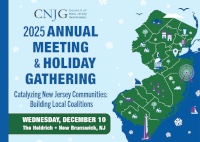
Leaders come from all walks of life, and we’re especially fortunate in the philanthropic sector to have an abundance of talented, thoughtful, and caring leaders. After connecting with social sector leaders, and building on your leadership acumen at the Center’s conference, we’re looking forward to seeing you at the CNJG Annual Meeting & Holiday Gathering on December 11. Our theme, Inspiring Change through Leadership: Maximizing Philanthropic Impact, could not be more timely.
As a leader, you know that in these complex times, philanthropic investment and commitment matter more than ever. Each of us, and our individual organizations, bring unique and deeply informed expertise, perspectives, influence, and skills that enrich our collective effort. Together, New Jersey’s philanthropic community will continue to build a space where all voices are heard, and collaboration is valued, so we can move forward to address critical issues in meaningful ways.
Underwriting or sponsoring convenings is another strategy to engage in leadership activities. I hope you will consider supporting the annual meeting of the CNJG membership with a sponsorship or special donation. This event is the one time per year when a significant number of Council members come together in one space, often sowing the very first seeds of collaboration. Learn more about sponsorship opportunities.
A big thank you to our sponsors to date - we couldn't do this without you! Special thanks to Signature Sponsor – Prudential; Contributing Sponsors – Devils Youth Foundation, Robert Wood Johnson Foundation, and Victoria Foundation; Supporting Sponsor – Grunin Foundation, Pincus Family Foundation, and WSFS Bank; and Colleague Sponsor – Horizon Blue Cross Blue Shield of New Jersey.
Wishing us all a safe, restful, and restorative Thanksgiving later this month when the campaign of 2024 becomes a distant memory, but our resolve to champion the causes that matter most to our communities remains steadfast. That’s what leaders do.
Warmly,
Theresa Jacks, President and CEO
Council of New Jersey Grantmakers