
Site Search
- resource provided by the Forum Network Knowledgebase.
Search Tip: Search with " " to find exact matches.
The Newark Philanthropic Liaison led a two-year process to develop a municipal economic empowerment blueprint that brings all sectors together in Newark to support resident’s financial health. The resulting document created a financial empowerment continuum that calls on the implementation of a tiered approach that focuses on helping residents stabilize, sustain, and secure their wealth over time. The document was created with grant funds from Cities for Financial Empowerment and in close coordination with the United Way of Greater Newark’s Asset Building Coalition.
This publication is focused on building an organization’s collaboration muscles. It offers guidance on steps grantmakers and nonprofits can take to adopt a "collaborative mindset" and align values and practice so they can be better partners in collaboration. It is based on research and interviews with grantmakers, nonprofit leaders, technical assistance providers and thought leaders from 2013 through 2015.
Recognizing that small businesses and entrepreneurs generate jobs, create diverse communities and are vital to prosperous cities, JPMorgan Chase announced this week that it is providing more than $1.5 million to four nonprofit organizations in New Jersey.
The goal, JPMorgan Chase officials said, is to help support diverse entrepreneurs and increase their access to capital, mentorship, technical assistance and other critical resources needed for business growth and scale.
There is considerable variation between DAF sponsors. To gain deeper insight into DAF sponsors’ perceptions, policies, and practices, the DAFRC gathered data from 128 DAF sponsor managers nationwide. This report highlights information about DAF sponsors’ strategies, operational capacity, philanthropic advising, internal policy execution, and marketing.
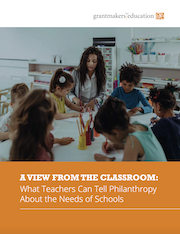
What can over a million teachers tell us about the needs of schools? This report digs into the data from 1.8 million teacher requests on the crowdfunding site DonorsChoose to tell the story from inside today's classrooms. We feel this data provides a roadmap for funders seeking to support students directly, but also for funders seeking broader reform of U.S. education policy and systems.
Based on interviews with more than two hundred philanthropy executives, practitioners, donors, board members, experts, and grantees around the world, this report, What's Next for Philanthropy in the 2020s: Seeing Philanthropy in a New Light, explores what emerging social, economic, and political shifts may mean for the future of philanthropy, charitable giving, and social innovation, and identifies seven "big shifts" that could create fundamental change in the philanthropic landscape.
The Head of Operations will operate at both the strategic and tactical levels - able to see the big picture while also rolling up their sleeves to draft policies, support organizational legal and compliance work, implement solutions, and manage day-to-day execution. The role sits at the intersection of the organization’s entities and will be responsible for streamlining shared services and ensuring strong coordination across areas such as CRM systems, vendor management, technology, office space, and security.
These resources are from CNJG's 2016 Annual Meeting & Holiday Luncheon where the topic of shifting demographics was explored. Research by the Pew Research Center shows that New Jersey, and the nation, is experiencing the most striking social, racial, economic, and demographic shifts that have not been seen in more than a century. Funders will need to address the new challenges this “next America” will face, including an increasing aging population, greater racial tapestry, the influence of religion and technology, and more.
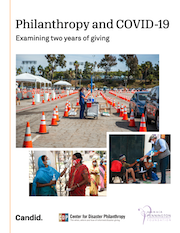
The second year of the coronavirus pandemic began optimistically with the promise of multiple, effective vaccines. However, 2021 proved to be a challenging and complex year. The pandemic continued to put pressure on economies and societies, exacerbating inequities, and hitting poorer, historically marginalized communities the hardest. Through it all, nonprofits continued to play an essential role, providing critical services, trusted information and a variety of resources.
In the report titled “Philanthropy and COVID-19: Examining two years of giving,” Candid and the Center for Disaster Philanthropy examine $1 billion in philanthropic funding for COVID-19-related efforts during 2021 to see how donors responded in the second year of the pandemic.
This report will assist donors as they consider how to invigorate their COVID-19 giving strategy to support equitable, holistic community recovery from the pandemic.