
Site Search
- resource provided by the Forum Network Knowledgebase.
Search Tip: Search with " " to find exact matches.
Based sardonically on Masterpiece Theatre, Washington Regional Association of Grantmakers’s Structural Racism Theaterintroduces the viewer to concrete examples of structural racism and implicit bias. It’s edgy, dryly humorous, “shareable,” and an incredibly different direction for WRAG. The first episode, "The Pernicious Compromise," focuses on the timely topic of the Electoral College and its connection to the Three-Fifths Compromise.
Watch the video
The Newark Philanthropic Liaison led a two-year process to develop a municipal economic empowerment blueprint that brings all sectors together in Newark to support resident’s financial health. The resulting document created a financial empowerment continuum that calls on the implementation of a tiered approach that focuses on helping residents stabilize, sustain, and secure their wealth over time. The document was created with grant funds from Cities for Financial Empowerment and in close coordination with the United Way of Greater Newark’s Asset Building Coalition.
The Bridging The Gap: Blacks in Philanthropy conference, is organized by the Smith Family Foundation.
Their mission for this conference is to promote philanthropy and drive social change in the community, and this event is a vital step toward achieving that goal. The conference is expected to draw over 300 attendees, including philanthropy professionals, non-profit executives, community leaders, and interested individuals. The agenda features keynote speeches, panel discussions, workshops on racial equity, diversity, and inclusion in philanthropy, and strategies for advancing social justice. This conference is a unique opportunity to engage in collaborative discussions, gain valuable insights, and build meaningful connections with like-minded individuals who share a passion for creating positive change. Together, we will explore innovative strategies, best practices, and impactful initiatives that empower and uplift black lives.
Cost: $100
Open to all Grantmakers
The COVID-19 global pandemic exacerbated longstanding disparities by race, gender, and socioeconomic status. Individuals, communities, and countries that were already vulnerable were even more at risk. The Choosing Change toolkit can help individual donors and institutional grantmakers at all levels identify proposals and teams whose work addresses the structural inequalities that prevent people from surviving, let alone thriving.
Mismatched: Philanthropy’s Response to the Call for Racial Justice is the most comprehensive assessment of racial equity and racial justice funding to date, providing a detailed analysis of funding from 2015–2018 and a preliminary analysis for 2020. Written by Malkia Devich Cyril, Lyle Matthew Kan, Ben Francisco Maulbeck, and Lori Villarosa, the report examines trends, contradictions, and divergences in funding for both racial equity and racial justice work.
This introduction describes four skills that help leaders to achieve better and more equitable results. The skills are part of Results Count™, the Annie E. Casey Foundation’s competency-based approach to leadership development. Through Results Count, leaders can develop and practice these skills over time to become more powerful and effective in their work. The skills touch on maximizing one’s contribution through data-driven and equity-informed analyses and performance measures.
Funding Indigenous Peoples: Strategies for Support, looks at how funders collaborate with and bring support to indigenous communities around the world. Through examples from a diverse range of foundations, this guide explores how grantmakers work with indigenous peoples, the approaches they take, and the practices they find effective.
This guide was developed in collaboration with International Funders for Indigenous Peoples (IFIP).
This case study examines the experience of the Corporation for Supportive Housing as it worked with the nonprofit consultancy AchieveMission to understand and adopt better human capital management plans and practices. CSH took part in AchieveMission's competitive Talent Initiative program, designed to help nonprofits invest wisely in their most important asset — people — especially in times of significant organizational change or rapid growth.
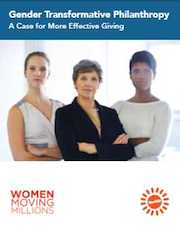
Attention to the role of gender is most useful with programs that seek to change unhealthy behaviors, such as reproductive health and teen pregnancy, gender-based violence, substance abuse and educational under-achievement. This guide suggests that funders can work to improve program outcomes by helping the funding community and grantees recognize how men and women are affected by disparities in social expectations, such as codes of manhood and womanhood.
These guides are designed to help foundations consider how more diverse and inclusive practices might advance their mission by making their work more effective and more reflective of communities served. By highlighting 10 ways foundations can approach diversity, this guide seeks to spark ideas and launch further dialogue.
There are three versions of this resource one for family, community and independent foundations.