
Site Search
- resource provided by the Forum Network Knowledgebase.
Search Tip: Search with " " to find exact matches.
The City of Newark and Newark Philanthropic Liaison are working closely with several consortia of nonprofits to address some of the City’s most critical challenges. Grantmakers with an interest in Newark are connecting with these groups to better understand issues, interact with organizational leaders, and find ways to leverage philanthropy across a range of needs.
The coalitions often have ambitious agendas that focus on reviewing and changing policy on local, statewide and national levels. They offer a platform to share information and create strong cases for increased investment from both public and private sources. Below is an overview of just three of these groups. Through their convenings, they provide a powerful opportunity for Newark-related nonprofits and grantmakers to mobilize to improve the fortunes of the State’s largest City.
Opportunity Reconnect
Mayor Cory Booker has made public safety the leading priority of his administration. Success will come only through lowered recidivism, better management, and increased job opportunities and support for persons returning from prison. The Opportunity Reconnect (OR) consortia meets weekly at Essex County College, the site of OR’s comprehensive one-stop center that offers ex-prisoners an array of services from dozens of organizations and agencies.
OR’s strength lies in its ability to create partnerships and memorandums of understanding among for-profit government contractors, community-based groups and government agencies. The shared protocols are having a profound effect on the City’s ability to provide efficient and effective services for thousands of returning inmates each month. The agreements are enabling the City to respond to RFPs from both private and federal sources to strengthen the capacity of OR and its effect on public safety. The City welcomes participation of grantmakers to further leverage the strength of these proposals and maximize OR’s continued growth.
Interagency Collaboration for Addiction Treatment
This informal collaborative of nonprofits, faith-based groups, government agencies, and funding partners meets regularly at Integrity House, a long-term residential and outpatient treatment program. Integrity House is the lead agency for the United Way’s Bridge to Recovery, a consortium effort of over 200 agencies dedicated to helping those with addiction problems.
Among ICAT’s goals is the creation of a central Newark facility to handle all intake, referral and screening of individuals in need of detox. The group is also seeking to link and combine databases among agencies for better support of clients, who often include the homeless and ex-prisoners. A number of legislative barriers prevent some persons from receiving aid to cover costs of addiction treatment. These persons often end up in hospital emergency rooms or under the jurisdiction of law enforcement. ICAT is looking at ways to advocate for policy changes that would provide the additional preventive-care funding to remedy these situations.
Green Future Summit Working Groups
Mayor Booker has called for the City to become a leader in urban sustainability by implementing economic and environmental strategies that will make Newark a safer, wealthier, and healthier place for its children and families. Under the auspices of Apollo Alliance, a national organization, a team of allies is developing an agenda and recruiting participants for the “Green Future Summit” in Newark on September 11-12. Pre-summit planning sessions have involved a coalition of businesses, government leaders, environmental groups, community-based organizations and grantmakers.
The coalition has divided into working groups focused on three areas: green buildings, green space, and green economic development/jobs. The working groups are now drafting roadmaps and defining concrete, measurable goals and strategies for each issue area (e.g. "retrofit 100 homes"). They are also securing commitments from stakeholders on how they will work to meet these goals.
The groups communicate through listservs and periodic check-in calls as they shape the Summit agenda, recruit speakers, and build the relationships necessary to carry their work forward to develop a roadmap for the City. Members of the CNJG are playing an active role in the Summit and additional partners are welcome.
CNJG members can gather a wealth of information by tapping into the resources of Newark’s collaborative groups. Additional consortia have been formed to address the foreclosure crisis, homelessness, newly-formed Family Success Centers, and other areas.
New Jersey grantmakers devote significant resources – both intellectual and financial – to many of the same focus areas as the Department of Community Affairs. Some of CNJG’s members invest almost exclusively in programs related to housing, neighborhood revitalization, and community development.
On June 10, join Commissioner Suárez of the New Jersey Department of Community Affairs for a candid discussion focusing on current priority areas within NJDCA and possible opportunities for New Jersey’s philanthropic community to partner with state government on areas of mutual concern.
This is an excellent opportunity for funders to share knowledge, insights, and best practices that can help to inform the public sector's strategies for addressing key issues facing the state.
Cost: Free for CNJG Members, $95 for Non Member Grantmakers.
A light lunch will be served.
Commissioner Jacquelyn Suárez – Bio
About the Department of Community Affairs (DCA)
DCA 2024 Press Releases
The NPL led a multi-year, cross-sector effort to explore, plan, and execute a guaranteed income pilot in Newark in partnership with Mayors for a Guaranteed Income and the Center for Guaranteed Income Research. On June 17, we hosted a community unveiling of the pilot’s results and laid out next steps. The NPL continues to work on the intersection of cash policy and economic stability and resilience.
Food is essential. But how often do you consider where your food comes from?This issue of What Funders Need to Know from the Washington Regional Association of Grantmakers explores the stages of the food system, from production all the way to disposal. Why is this important to philanthropy?
Because hunger, food insecurity, nutrition-related chronic disease, the health of resource lands and waterways, wages, and equal opportunity in the food economy all converge in our regional food system.
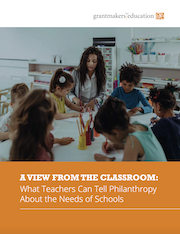
What can over a million teachers tell us about the needs of schools? This report digs into the data from 1.8 million teacher requests on the crowdfunding site DonorsChoose to tell the story from inside today's classrooms. We feel this data provides a roadmap for funders seeking to support students directly, but also for funders seeking broader reform of U.S. education policy and systems.
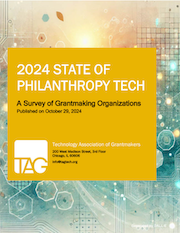
The Technology Association of Grantmakers (TAG) 2024 State of Philanthropy Tech report provides essential data that will shape the future of technology in philanthropy. It covers topics such as IT staffing ratios, the increasing role of artificial intelligence (AI), and improved cybersecurity measures. As the only comprehensive survey dedicated to technology in philanthropy, the report offers valuable insights into how grantmaking organizations are utilizing technology to enhance their missions, increase their impact, and manage risks effectively.
This case study examines the experience of the Corporation for Supportive Housing as it worked with the nonprofit consultancy AchieveMission to understand and adopt better human capital management plans and practices. CSH took part in AchieveMission's competitive Talent Initiative program, designed to help nonprofits invest wisely in their most important asset — people — especially in times of significant organizational change or rapid growth.