
Site Search
- resource provided by the Forum Network Knowledgebase.
Search Tip: Search with " " to find exact matches.
Share your giving data and Get on the Map!
Your data will power valuable resources for your organization and our region including access to the CNJG Foundation Funding Map and COVID-19 Funding Map on the powerful interactive searchable mapping platform, engineered by Candid.
How to share your data
 Export your grants data from your software system.
Most grants management software products have documented how to export the information.
If you don’t see your software provider on that list, download their eReporting template, an Excel spreadsheet, which you can use to complete the information they need.
Submit your data to Candid by emailing the completed template with your data in it to [email protected] and cc Craig Weinrich.
You can also follow the detailed instructions on this page.
Candid will make every effort to post your data to the map within 5 business days.
Get the answers to your Frequently Asked Questions including:
What information do I need to provide?
Why is it important to provide a grant description?
How is my grants data coded by Candid?
How frequently should I share my grants data?
How quickly will my information appear on my complimentary map?
Can I embed my complimentary map on my website?
What should I do if corrections need to be made to my data?
How will my grant information be used and shared?
How do I responsibly share sensitive grants data?
We’re coming off a historic week for New Jersey. As we went to the polls for the November elections – including voting for governor, we witnessed democracy in action, a reminder that leadership and civic participation shape not only policy but the everyday realities of our communities.
Nationally, it’s been historic as well. The lapse and confusion of federal funding for SNAP, due to the government shutdown, continues to leave many families uncertain about their next meal. Multiple lawsuits have been filed demanding support for SNAP, including one led by the National Council of Nonprofits. On Friday, Governor Murphy announced that the NJ Department of Human Services would “immediately process” full SNAP benefits for November, followed by a Trump administration memo on Saturday directing states to "immediately undo" any actions they have made to provide SNAP benefits. The disruption underscores the importance of a government that functions for all the people, and solid, trustworthy safety nets. More than 800,000 New Jerseyans rely on these critical benefits, and even brief interruptions create ripples that reach food pantries, schools, local nonprofit organizations, and our overall economy. And while the shutdown may end soon, it’s not only SNAP recipients hurting. As federal workers are missing paychecks, they are having to make difficult choices between buying food or paying the mortgage.
Throughout this crisis, we’ve seen the social sector stepping up. In response to these challenging times, CNJG members are taking action. We’ve heard from several funders that have already - or are planning to - disburse emergency supplemental grants. Several members of the Newark Funders Affinity Group quickly responded to the loss of SNAP benefits by opening a fund with the United Way of Greater Newark to directly support Newark residents. The fund will prioritize resourcing five community hubs opened by Mayor Baraka and staffed by nonprofit partners from around the city. The Tepper Foundation is creating a pooled fund to help address rising food insecurity across the state and will match donations up to $2.5 million. Donations will be routed through the Community Foundation of New Jersey to a network of emergency providers, including food banks and pantries. If you are interested in learning more, please contact Rose Rodriguez. More broadly, The Community Foundation of South Jersey launched the South Jersey Resiliency Fund “to enable individuals and organizations to pool resources to support nonprofits facing increased demand and reduced resources.” This fund joins others formed earlier this year to strengthen the nonprofit sector.
The power of coming together is no more evident than in times of crisis. Last week the CNJG CEO listserve generated a great deal of response when a member asked, “what are you doing in response to SNAP?” That is exactly the purpose of the CNJG listserves, and I encourage you to connect with your colleagues actively and often. Beyond planned programs and affinity group meetings, CNJG members can also connect virtually on a monthly basis via First Fridays for Philanthropy and CEO to CEO Conversations. And please continue to share your stories with Manager of Communications Shakirat Odunsi, about how you are changing and/or adapting your grantmaking in response to today and tomorrow’s challenges.
 Next month, CNJG members will gather in person for the CNJG Annual Meeting & Holiday Gathering on December 10, where we will explore our theme: Catalyzing New Jersey Communities: Building Local Coalitions, and our opening workshop will explore the New Jersey Philanthropy Hub, a first-of-its-kind data platform that brings together a clear, comprehensive view of giving across our state.
While the theme of the Annual Meeting and focus of the opening workshop could not be timelier, the Annual Meeting & Holiday Gathering is also a space to connect, reflect, and renew our shared commitment to the people and places we serve. If you haven’t yet registered, I encourage you to do so.
Another underlying theme evident at every Annual Meeting is gratefulness. Thank you to our generous sponsors, whose partnership makes this convening possible: The Prudential Foundation, Devils Youth Foundation, Robert Wood Johnson Foundation, Pincus Family Foundation, The Campbell's Company, Grunin Foundation, and WSFS CARES Foundation. Please reach out to me or Development Associate Fortunata Cuomo if you are interested in sponsoring the Annual Meeting & Holiday Gathering. Our sponsors’ commitment reflects the very spirit of coalition-building.
It’s good to be back from my much-needed sabbatical earlier this fall. The pause reminded me of the importance of renewal and perspective. I return with a renewed sense of purpose and gratitude for this community and the collective work that binds us together. Thank you for the work you do every day, often quietly, always purposefully, to advance the well-being of New Jersey’s communities.
Once again, I hope you will join us on December 10 for the CNJG Annual Meeting & Holiday Gathering. It’s our one opportunity each year to come together as peers and a community of funders to reflect, connect, and build momentum for the work ahead. Please register today and add your voice to the conversation.
With gratitude for all you do,
Theresa Jacks, President and CEO
Council of New Jersey Grantmakers
This weekly conference call series welcomed New Jersey-based grantmakers along with national funders and provided an opportunity for grantmakers to hear from a wide range of experts in the field of disaster philanthropy. Series 1 started on November 5, 2012, one week after Sandy struck New Jersey, and continued through March 25, 2013. Series 2 started on September 9, 2013 and concluded on November 4, 2013. The written compendium of the recordings is listed below.
Please Log In to view resources from this event.
Reimagining Philanthropy: Data for Social Impact
Held:
Monday, December 7 - 2:00 to 3:30 pm -- Skill-Building Workshop
Tuesday, December 8 - 12:30 to 2:00 pm -- Business Meeting & Keynote Presentation
Thank you to everyone who attended CNJG’s first ever virtual Annual Meeting & Holiday Gathering. This year’s meeting focused on the many ways philanthropy can use data for social impact.
Data science is a powerful tool to address housing and food insecurity, education inequality, health disparities, civic injustice, and other longstanding social issues that continue to intensify during the pandemic. Building data capacity equips local leaders with information to develop and advocate for more effective policies. New evaluation strategies can outperform outdated processes that reinforce inequities and slow progress. Research and technology that fuels innovation in the private sector can help nonprofit and government organizations drive impact in New Jersey communities..
On Day 1, the Annual Meeting Workshop focused on evaluation and learning practices that center equity and social impact. And on Day 2, Keynote panelists shared how data science can help connect people to services, address racial inequity, and create greater impact in our communities during the pandemic and beyond..
Philanthropy can’t go back to “normal,” because normal wasn’t good enough. During this year’s Virtual 2020 Annual Meeting & Holiday Gathering we explored how we can reimagine philanthropy by harnessing the full power of data for social impact.
The Council of New Jersey Grantmakers would like to thank our sponsors for their generous support: Signature Sponsors – Novartis and PSEG; Sustaining Sponsors – Prudential and Horizon Blue Cross Blue Shield of New Jersey; Collaborating Sponsor – Robert Wood Johnson Foundation; and Performance Sponsor – The Provident Bank Foundation.
General Operating Support or General Project Support
Affirmation: Funds with the least restrictions are the most valuable
Nonprofits maintain and strengthen their organizations when their funds are unrestricted. Data shows flexible and reliable funding increases impact when nonprofit leaders have control over how funds flow to meet the needs of their constituents and internal operations, as demonstrated during the pandemic when funders released previously restricted funding. General operating support (GOS) funding signals trust in our partners and can open more honest dialogue about meeting the mutual goals of the funder and nonprofit. Funders who make project or program grants should trust the organization and provide flexible funding within a specific program.
Activities
• Over the short term, funders aim to shift their GOS activity by 30%. (30% more grants shift from program to GOS, or from fully restricted to negotiated GOS.)
• Provide grants as unrestricted organizational general operating support. The long-term ideal is for most, if not all, grants to be 100% GOS, unless a funder is legally precluded from doing otherwise.
• For project/program grants, 100% of the grant awarded is unrestricted (negotiated GOS), applying mission-based and mutually negotiated outcomes.
• Nonprofits articulate their organizational vision, strategies and intended outcomes to funders; funders understand the models of their grantee partners and learn from them how the grantee partner's work will lead to change.
• Trust nonprofit partners to know how to best apply their funding.
• Create a shared understanding of the meaning and importance of full-cost budgeting and real-cost funding.
Short-term Outcomes
• 70% of funders are shifting some of their distribution to making general operating support grants.
• 100% of program/project grants are designated unrestricted.
Long-term Outcomes
• 100% of all grants are made without restrictions, unless limited by covenant or donor wishes in the case of community foundations.
• All nonprofits can clearly articulate their vision, strategies, outcomes, and business models to funders; and funders understand them and trust them to know how best to use their funds.
How to Begin Doing Good Better on Flexibility Learning Opportunities
• Why aren’t some funders planning to award GOS or negotiate GOS?
• Ask funders: If you participated in CNJG’s 2022 funder survey and indicated that you planned to initiate GOS, have you done so? • Why are some grants restricted?
• What would it take for funders to change?
Pre-Work
• Seek and share learning opportunities for funders, prioritizing education of foundation boards, to address the barriers to awarding GOS and understand how restricted funding undermines financial sustainability.
• For funders who already regularly provide GOS funding, educate/advocate for others to do the same.
• Learn how GOS/negotiated GOS strengthens grantee partners and the multiple ways they can use and evaluate GOS. Actively seek insights from nonprofits to reinforce the message about GOS in their funding partnerships.
• As an incremental step for funders that are not receptive to GOS, provide education about negotiated general programming support (flexible funding within a mutually agreed-upon program area, as opposed to organization-wide GOS).
• Share promising practices on evaluation of GOS and negotiated GO
These news articles show our members’ responses to the coronavirus pandemic, including announcements, emails, blogs, grants and other resources. If you have items to add, please email us.
Actions and Announcements
Audible Creates Global Center for Urban Development and Hires Aisha Glover to Help Lead It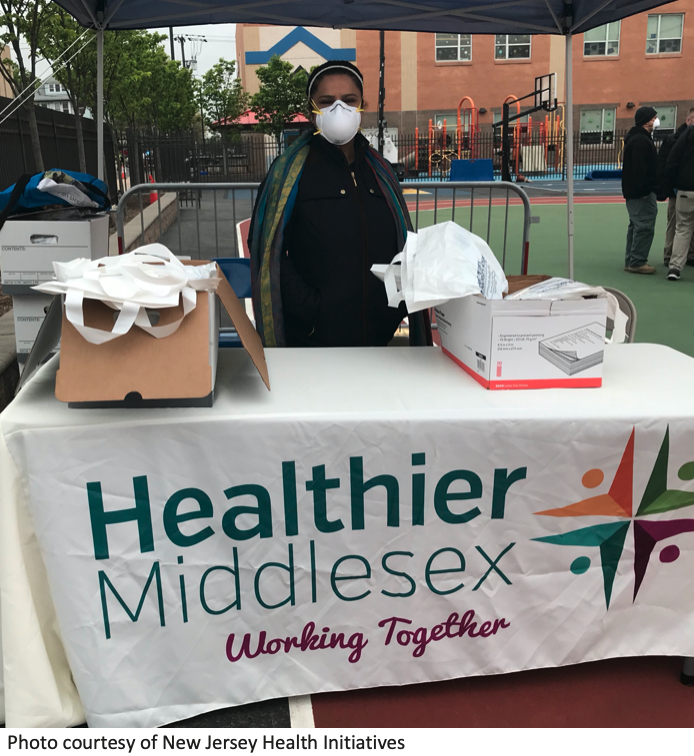
Russell Berrie Foundation Post: Our Response to COVID-19
Campbell Soup to pay hourly employees premium during outbreak
Post: Our Response to COVID-19
Geraldine R. Dodge Foundation
Dodge signs CoF pledge
Grunin Foundation 3/13 COVID-19 Announcement and 3/31 COVID-19 Update
Johnson & Johnson’s lead COVID-19 vaccine candidate shots for early 2021 authorization
Robert Wood Johnson Foundation
Culture of Health Blog: Handwashing to Slow the Coronavirus Pandemic
Opinion: Racism is the other virus sweeping America during this pandemic by Julie Morita, M.D
Opinion: Disabled Americans can’t be a COVID-19 afterthought by Dr. Richard Besser
Culture of Health Blog: Incarceration Rates: A Key Measure of Health in America
Opinion: In Covid-19 Crisis, Philanthropy’s Attention Must Focus on People With Disabilities
Brief: Health Equity Principles for State and Local Leaders in Responding, Reopening & Recovering from COVID-19
Culture of Health Blog: Lessons for an Equitable COVID-19 Response and Recovery
Kessler Foundation has produced two COVID related podcasts:
Practical Tips to Help Survive the Pandemic as a Parent of a Child with Autism
COVID-19 and Spinal Cord Injury: Minimizing Risks for Complications
New Jersey Council of Humanities Op-ed: Staying Human During the Pandemic
New Jersey Health Initiatives’ Deputy Director of Programs, and CNJG Board Member Diane Hagerman penned “Collaboration across county lines is key to a healthy New Jersey” on NJ Spotlight.
New Jersey Council for the Humanities and New Jersey Historical Commission present a webinar series for cultural nonprofits navigating the COVID-19 pandemic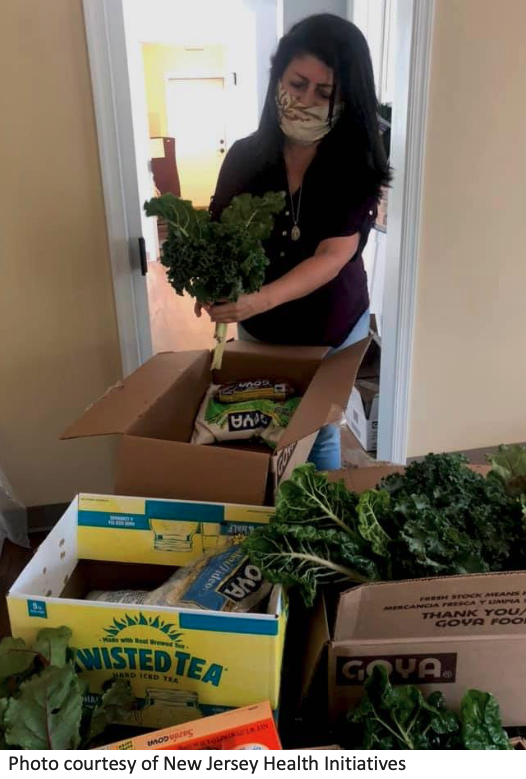
New Jersey Economic Development Authority assists more than 10,000 small businesses impacted by COVID-19
New Jersey State Council on the Arts partners with ArtPride New Jersey Foundation on “Keep Jersey Arts Alive” campaign.
Newark Arts and the City of Newark Retools Its Ambitious Arts Grant Program to Respond to COVID-19
Nicholson Foundation Email to Grantees
Nicholson honors their own Colette Lamothe-Galette, lost to COVID-19
OceanFirst Foundation and Grunin Foundation along with Townsquare Media Launch Acts of Kindness Campaign
Subaru teams up with TerraCycle on PPE recycling
Turrell Fund Email to Grantees about CARES Act
Turrell Fund manages new Passaic County Pandemic Partnership hosted at the Community Foundation of New Jersey
United Way of Greater Mercer County Op-ed message from Sandra Toussaint
Valley National Bank offers Community Pledge CD to help donate and save at the same time
Resources
New Jersey State Council on the Arts Resources for Artists and Arts Organizations
Video: Hear from recognizable native New Jersey voices about the importance of donating to the New Jersey Pandemic Relief Fund
CNJG hosts regular briefings where funders hear from government officials, disaster recovery and health experts, nonprofit leaders, funders, and other stakeholders dealing with the COVID-19 pandemic. The briefings provide an opportunity to share how colleagues are changing grantmaking practices for rapid response, learn about new policies and government actions, and connect with local leaders who work with people whose financial, physical, and mental health suffers due to COVID-19. Series I topics included food insecurity, mapping response funding, racial health disparities, federal and state policy, and updates from New Jersey response funds and Rapid Response Surveys, completed in partnership with the Center for Non-Profits in March, April, and July 2020.
FAQs for Benefit Survey
What is the New Jersey Foundation Benefits & Salary Summary Report?
Developed exclusively for CNJG members, the New Jersey Foundation Benefits & Salary Summary Report presents comprehensive benefits data specific to New Jersey's grantmaking community, alongside data from the Council on Foundations' annual salary survey. The last report, produced in 2017, can be found on our website.
Given increased scrutiny in the areas of compensation and benefits, the need to benchmark this information within the field has become even more important. The 2020 New Jersey Foundation Benefits & Salary Summary Report will make available critical information needed to determine fair compensation and benefits in the state across multiple organizational levels.
Who is eligible to participate in this survey?
To be eligible to participate in the survey, your organization must have at least one PAID (full-time or part-time) employee. The beginning of the survey will help respondents determine if they are eligible to participate. Even if you are NOT eligible to participate, please complete the first four questions of the survey. You will then be directed to the last page of the survey where you will be asked to submit your data. You do not need to be a CNJG member to participate. If you do participate, but are not a CNJG member, you will receive a copy of the report.
Where do I complete the survey?
The survey may be completed here: https://www.surveymonkey.com/r/2020CNJGBenefitsSurvey.
When does the survey need to be completed?
The deadline for submitting completed surveys is August 10, 2020.
I'm not the right person to complete this survey, can I email it to someone else to complete?
You may forward the email that contains the survey link to someone else in your organization. The recipient will be able to click on the survey link to access the survey.
How long will it take to complete the survey?
It is estimated that entering in the data should take around one hour (not including the time it will take to research your organization’s information). If you offer more benefits, it may take more time; if you offer less, the less time it will take to complete. Logic is built into the online survey, enabling you to skip questions or entire sections depending on what your organization offers. CNJG suggests looking through the questions first (available in PDF form) and compiling your answers to then enter in the data all at once online.
How do I submit our information to the survey?
CNJG developed the survey using SurveyMonkey, so that you may enter all of your data online. The prompts at the bottom of each page guide you as you enter your information.
Can I see all of the questions first?
Yes! The survey in its entirety can be found below. Feel free to use this document to gather your benefits data, and then enter the information all at once online at https://www.surveymonkey.com/r/2020CNJGBenefitsSurvey.
For which year/time period should I provide compensation and benefits data?
The Benefits Survey should be based on benefits data for the 2020 calendar year. Please complete the survey questions by indicating the benefits that your organization is currently offering to employees in 2020.
Help! The way that this question is structured is difficult (or impossible) for me to answer.
We understand organizations provide different kinds of benefits and have developed novel benefit packages. And, often, benefit packages differ within an organization. Please complete the survey questions by indicating the benefits that are offered to the majority of employees in your organization, and please use the comment boxes after some of the questions and at the end of the survey to further explain/clarify your responses. Please also note that, while many questions are required (indicated with an asterisk) some questions in the survey are optional and can be skipped.
Once I've started the survey, can I save it and complete it another time?
Yes! You may leave the survey at any time by clicking on "Exit this survey" on the upper right hand corner of the page. Note: if you have just entered a page of data, proceed to the next page before you exit, otherwise the data just entered for the current page will not be saved. To reopen the survey, click on the link in the survey email that was sent to you.
Once I've completed the survey, how do I submit my input?
To submit your input, go to the last page of the survey and click on "Submit Survey." Your input will automatically be submitted.
I clicked on "Submit Survey," but I wasn't finished completing the survey - what should I do?
To make changes in a survey that has already been submitted, please contact Craig Weinrich. It will be possible for you to make changes to your survey input until the survey is officially closed on August 10, 2020.
What topics will be covered?
The following topics will be covered in the survey:
• Survey Eligibility
• Organization Information
• Employment
• Leave Benefits
• Insurance Benefits
• Retirement
• Other Benefits
• Retiree Benefits
• Benefits Cost
Who do I contact if I have questions?
Should you have any questions or need additional information, please contact Craig Weinrich.
CNJG thanks you in advance for your time and assistance with this endeavor. The report that we create becomes an important tool for you to benchmark your salaries and benefits plans for the coming years, so the time and effort will be incredibly valuable to your organization and other CNJG members.
Empowering the Future: Harnessing AI and Data for Philanthropic Social Impact
Date: Tuesday, June 18
Time: 9:30 a.m. to 3:30 p.m.
Location
New Brunswick Performing Arts Center
Arthur Laurents Theater
11 Livingston Ave, New Brunswick, NJ 08901
Directions and Parking
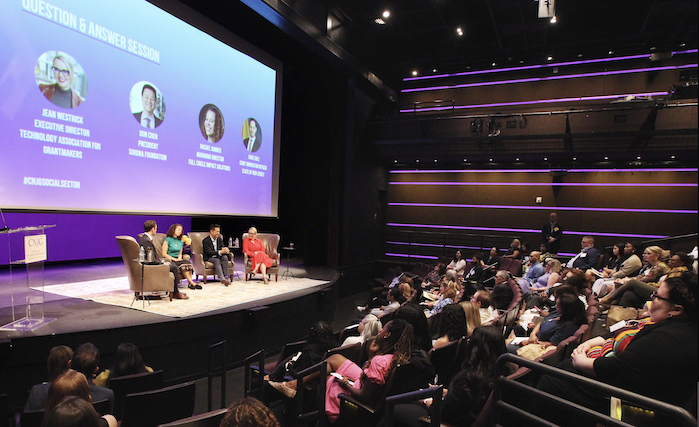
On Tuesday, June 18, 2024, the Council of New Jersey Grantmakers held the Spring Colloquium – A Conversation on the Social Sector at the New Brunswick Performing Arts center. This year, we explored the impact of AI and data on philanthropy and the nonprofit sector. Our panel discussion will brought together multiple perspectives to explore how AI can enhance problem-solving without losing human connections, how it affects equity, and how philanthropy has engaged with AI for funding initiatives.
The Technology Association of Grantmakers’ new Executive Director, Jean Westrick, moderated our esteemed panel that included Don Chen, President, Surdna Foundation; Rachel Kimber, Full Circle Solutions; and Dave Cole, State pf New Jersey’s Chief Innovation Officer.
After the panel, Jean Westrick, TAG, facilitated an afternoon session on an AI Framework for Philanthropy. Additionally, the Community Resource Exchange presented an afternoon session on an AI Guide for Nonprofits facilitated by their CEO, Tiloma Jayasinghe, CEO and Jared Carroll, Senior Consultant.
CNJG’s spring colloquium brought together New Jersey grantmakers and nonprofits to connect with each other, Increase their knowledge, learn best practices, find opportunities for collaboration, and to be introduced to new ideas.
Conference Photos
Inspiring Change through Leadership: Maximizing Philanthropic Impact
 Wednesday, December 11, 2024 - 9:00am to 3:00pm
Luncheon, Keynote Presentation & Workshop
Location: APA Hotel Woodbridge, 120 Wood Ave S, Iselin, NJ 08830
The Council of New Jersey Grantmakers thanks everyone who attended our 2024 Annual Meeting & Holiday Gathering. On Wednesday, December 11, over 130 Council members and special guests gathered to celebrate the holiday season, welcome new CNJG members, convene our annual business meeting, and feature a dynamic discussion related to the vital work of philanthropy.
The Council’s 2024 Annual Meeting & Holiday Gathering was the place where CNJG members and New Jersey’s philanthropic community came together to share ideas about the important work they’re doing. It also provided a valuable opportunity to connect with colleagues.
This year’s theme, Inspiring Change through Leadership: Maximizing Philanthropic Impact, featured keynote speaker Amalia Brindis Delgado of the Panta Rhea Foundation.
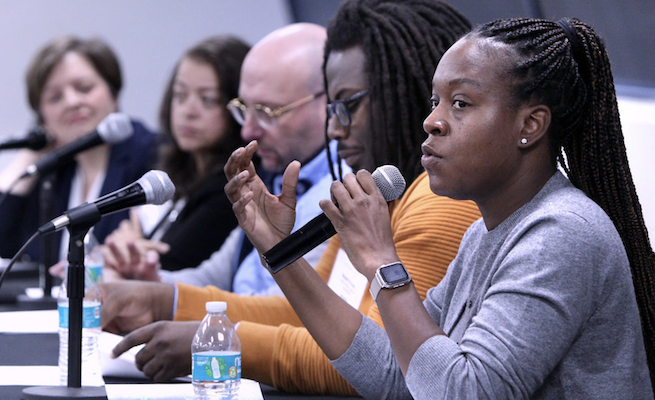
The Annual Meeting included a workshop that explored the New Jersey Principles for Philanthropy. An overview of the Principles was presented, followed by a panel of fellow CNJG members who discussed how they are already using the Principles within their organizations. Attendees also had time to discuss how they could leverage the New Jersey Principles for Philanthropy to make changes within their own organizations.
Annual Meeting Photos
This advocacy and civic engagement toolkit is designed for private foundations that want to educate and encourage their grantees about getting involved in civic and policy activities to increase organizational capacity and impact. While its primary focus is on the grantmaking activity of foundations, the toolkit also addresses rules and guidance for policy involvement by foundation officials acting on behalf of their foundations.
Get on the map and give smarter
Get on the Map is an exciting data-sharing initiative designed to dramatically improve the quality and availability of giving data for our region. Using this tool to put your grantmaking in context will provide valuable insights that can transform your giving.
Knowing how other foundations or corporations are funding in a certain geographic area or with a specific nonprofit can make everyone’s work more effective.
Imagine real-time answers to questions like:
- How are others serving at-risk youth?
- Are organizations in our region receiving enough capacity building support?
- Who else funds economic development in our rural communities?
Through a partnership with Candid (formerly the Foundation Center) and the United Philanthropy Forum, Get on the Map enables CNJG members to see the scope of their grantmaking, find natural funding partners, and gain deeper understanding of New Jersey’s philanthropic landscape.
Watch the short video below to learn how easy it is to Get on the Map!
It starts with sharing your giving data
Your data will power valuable resources for your organization and our region, including access to the CNJG Foundation Funding Map, a special interactive searchable mapping platform, engineered by Candid.
When you share your data, you control your story. No one knows your grantmaking better than you. Tell your story, your way is good for the sector because better information benefits everyone. Join the community of funders sharing their data to ensure the field is acting on the best possible information. Share Now!
Self-Paced Training for Funders on Using Candid
Candid has also launched a new, free self-paced course for funders: Funding Smarter: Using Candid Tools to Inform and Share Your Foundation’s Work. The course is meant to help funders use Candid’s mapping, data, and knowledge tools to better identify funding peers, potential grantee partners, identify funding connections and gaps, and learn from knowledge other funders have already shared. It also highlights the value of sharing data with Candid.
President Obama's Hurricane Sandy Task Force released this rebuilding strategy to serve as a model for communities across the nation facing greater risks from extreme weather and to continue helping the Sandy-affected region rebuild. The Rebuilding Strategy contains 69 policy recommendations, many of which have already been adopted, that will help homeowners stay in and repair their homes, strengthen small businesses and revitalize local economies and ensure entire communities are better able to withstand and recover from future storms.
Joint Statement from CNJG and the Center for Non-Profits
This statement also appeared on NJ Spotlight.
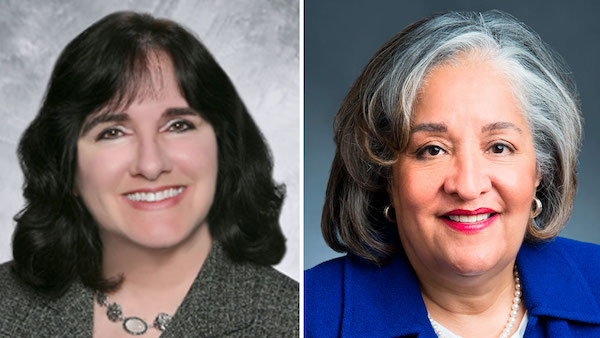
A conversation between two customers in line at a New Jersey supermarket turned ugly when one man denigrated the other with a racial slur and blamed the fellow shopper for the coronavirus pandemic.
With so much else going on these days, it would be so easy to react to such a seemingly minor incident by saying, oh well, these things happen. Times are tough; tempers are short.
But shrugging our shoulders is not an option. Doing so is complicity in a wrongful acts that too often are repeated, over and over. Our silence merely emboldens those who would tear apart the fabric of our society, whether through hate or ignorance – or the extremely volatile mix of the two.
It’s not difficult to connect the dots between “little” incidents and the systemic racism that leads to tragedies like the killing of George Floyd in Minneapolis. When we ignore or accept any examples of people being demeaned over what they look like or where they (or their ancestors) came from, we only open the door for massive abuses and the wrenching reckoning that follows them.
We mustn’t be cowed by fear of being seen as overly sensitive or labeled “politically correct.” This is about being morally and ethically correct in the face of bias and hatred – and that shouldn’t be too much to ask of Americans, regardless of their political party or ideology.
As state Attorney General Gurbir Grewal said recently, “COVID-19 is no excuse for racism, xenophobia, or hate. Discrimination and harassment in violation of New Jersey law remains illegal even if it occurs against the backdrop of a global pandemic." It’s gratifying to live in a state where the top law enforcement officer speaks out this way.
Unfortunately, it also is a state where reported hate crimes are up in recent years. We can’t tolerate such behavior, whether by police, elected officials or “average people.” There is too much at stake for bias to become the new normal.
As the leaders of the major philanthropic and non-profit membership organizations in New Jersey, representing both the wide range of non-profit groups and the multi-faceted funders of those groups, we feel compelled to speak out against the hateful responses we and our members have witnessed in reaction to the COVID-19 Pandemic.
Our country has seen countless examples of selfless sacrifice and good works over the past weeks, both on individual and institutional levels. We are proud that the members our organizations have been leaders in responding to the needs of our community.
But to our distress, some individuals are using the pandemic to put forward their bias and hatred toward their fellow citizens.
Times of crisis bring to the surface, on the part of some people, the need to scapegoat. Often, this takes the form of lashing out at particular groups, stirred up by inflamed rhetoric or more subtle code words or phrases, having no relationship to facts. In this time, there have been verbal and physical attacks against people of Asian and Pacific Islander background, as there were against Muslims after September 11 and against African-Americans and Latinos in countless other instances. This hatred and these attacks must stop.
The non-profit sector is the backbone of our communities, providing assistance and education to a wide range of people, in good times and especially in challenging times. Many of these services are a lifeline to people of all backgrounds, religions, ethnicities and statuses in life.
Non-profit organizations are the vehicle through which people can work together to selflessly assist others. People around the world view the United States as being unique in the breadth and depth of its charitable and philanthropic work, engaging the talents of all individuals, regardless of their economic or social status.
We call upon all people of good conscience in their good work to be alert for hateful words and actions and – always -- to speak out against them, both as individuals and as organizations.
Our language and our actions do matter.
Everyone, and especially people in positions of public trust or prominence, has the obligation to use our works and our lives to assist all in need and to honor the dignity and potential of all those we meet.
We call on not only our own members, but everyone who serves and volunteers in our sector to join us in this effort to speak out against racism and hatred and to exemplify all the best that we know our country is.
Maria Vizcarrondo
CNJG CEO and President
Linda Czipo
Center for Non-Profits CEO and President
William V. Engel
CNJG Board Chair
Gina M. Plotino
Center for Non-Profits Board Chair
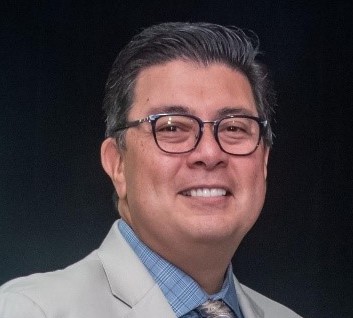
New Jersey’s philanthropic community mourns the loss of Jeffery Vega, who passed away January 28.
Jeff joined CNJG’s Board in 2016, and during his tenure served as First Vice Chair and Board Chair, and participated on multiple committees, affinity groups, and co-chaired the Trenton Area and Mercer County Funders affinity group. Jeff shaped and cultivated the direction and focus of CNJG through his supportive and proactive leadership. His direction and guidance during the pandemic helped CNJG not only stay the course, but continue to grow and thrive.
“Working with Jeff was a joy and a privilege,” CNJG President and CEO Theresa Jacks said. “Jeff guided us through the pandemic, a leadership transition, a strategic planning process, the approval of equity principles, and CNJG’s first-ever policy agenda with a steady hand, fierce commitment to equity, unwavering dedication to the membership, and the perfect combination of visionary thinking, wisdom, and kindness.”
His CNJG legacy includes the 2023 Strategic Plan, the creation of the Racial Equity Committee, CNJG’s first policy agenda, the New Jersey Principles for Philanthropy, and leading a dynamic and diverse board.
Jeff was the President and CEO of Princeton Area Community Foundation since 2015. Before joining PACF, Jeff was President of New Brunswick Tomorrow.
You can read more at the Princeton Area Community Foundation’s tribute page and announcement of Jeff’s passing.
This guide was designed to help the state’s philanthropic community understand their ethical, legal, and fiduciary requirements and obligations.
Kevin Callaghan is Next Leader of Innovative Partnership
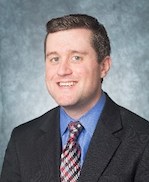 The Council of New Jersey Grantmakers (CNJG) and the City of Newark are pleased to announce the appointment of Kevin Callaghan as the Council’s new Philanthropic Liaison to the City of Newark. Based in Newark’s City Hall, Callaghan will lead the Office of the Newark Philanthropic Liaison (ONPL) as it convenes, connects and leverages the resources of the state, regional and national philanthropic community for the benefit of Newark’s citizens and institutions. For nearly five years Callaghan served as the Program Officer at the Foundation for Newark’s Future, the local arm of national philanthropic funding donated to the City of Newark to improve education opportunities for youth. Most recently, he served as Project Lead on the City’s Summer Youth Employment Program. He will formally undertake his new role on September 1.
Newark Mayor Ras Baraka and CNJG President Nina Stack hailed Callaghan’s appointment. “In the time I’ve come to know Kevin I’ve seen the passion he has for the City of Newark and the thoughtful, inclusive way he approaches his work,” commented Mayor Baraka. “We are glad to have him on our team.” CNJG President Stack added, “Kevin brings an understanding of how foundations work and a real appreciation for the impact strategic philanthropy can have when it works collaboratively with other funders and government leaders. We are very excited to welcome Kevin in this role as leader of the ONPL and look forward to seeing how he builds on the Liaison Office’s achievements over the last eight years.”
Callaghan replaces former Newark Philanthropic Liaison Jeremy Johnson who helped define this innovative collaboration between the Council and the City of Newark in 2007 under former Mayor, now United States Senator, Cory Booker. It marked one of the nation’s first formal partnerships between a city and the philanthropic sector. Since then, and with the subsequent election of Mayor Ras Baraka in 2014, the ONPL has continued to be a nationally acclaimed model for public - philanthropic alliances, leveraging more than $50 million in private support for City initiatives.
Callaghan will work in partnership with Mayor Baraka’s Chief Policy Advisor Tai Cooper and cabinet to support public safety, summer youth employment, workforce development, economic development, health and wellness, education and literacy, immigration, and neighborhood and place-based initiatives. “The Office of the Newark Philanthropic Liaison is a critical resource to our city. Having previously worked with Kevin, I know he will be very effective in his new role and I look forward to continued collaboration with him,” said Cooper.
“It is an honor to have been selected to lead the Office of the Newark Philanthropic Liaison. I know firsthand the value of collaboratively harnessing the power of philanthropic resources for the direct benefit of Newark’s communities. Under the guiding principle of collective action, I look forward to working with the grantmaking community and the City of Newark to leverage every possible opportunity to unlock the endless potential of this city,” said Callaghan.
A non-partisan position, the ONPL is funded by a consortium of grantmakers including Bank of America, the Geraldine R. Dodge Foundation, The Nicholson Foundation, The Prudential Foundation, Schumann Fund for New Jersey, Turrell Fund and the Victoria Foundation. “Having served with my colleagues as an on-going funder of this unique initiative, I am delighted to know that the fine work that has been accomplished since its inception will continue under the able leadership of Kevin Callaghan,” said Dr. Irene Cooper- Basch, Executive Officer of the Victoria Foundation.
Previously, Callaghan served for two years as a middle school classroom teacher in Philadelphia through Teach for America. Earlier in his career, he worked for the federal government as a special assistant at the Overseas Private Investment Corporation in Washington D.C. where he supported development efforts for emerging markets.
Callaghan holds a Bachelor’s Degree in Political Science and History from St. Peter’s University in Jersey City and a Masters’ Degree in Urban Education from the University of Pennsylvania. Born and raised in New Jersey, he resides with his family in Essex County.
At a recent Ocean & Monmouth Funders Roundtable, the group discussed all of the different databases and lists of nonprofits available to philanthropy to be able to research new and different nonprofits.