
Site Search
- resource provided by the Forum Network Knowledgebase.
Search Tip: Search with " " to find exact matches.
This paper explores community democracy as a cultural choice and a potential organizing system for philanthropy using stories that demonstrate its principles and practices, primarily growing from the experience of northern California communities. This experience offers a framework of principles and a beginning set of conclusions about how philanthropy can develop productive partnerships from the perspective of a place-based, community democracy.
The Future of Work and the Role of Philanthropy
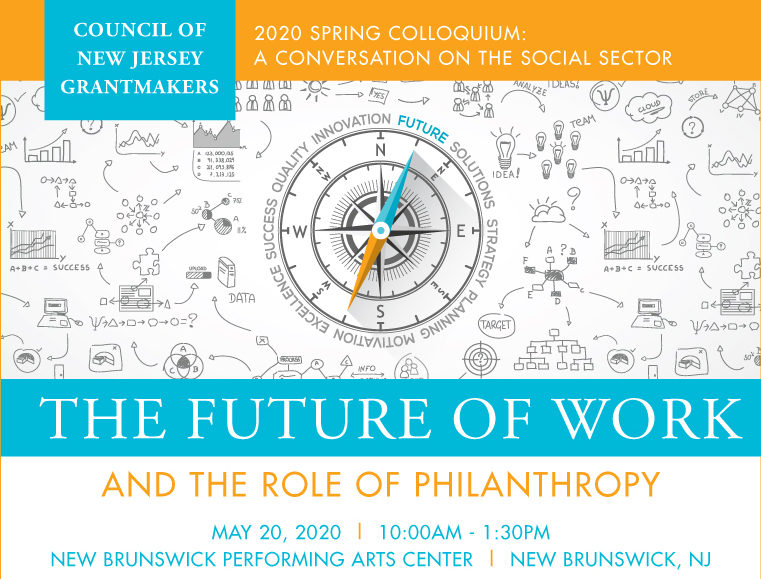
Date: This event has been postponed.
After much consideration and in light of the ongoing spread of coronavirus, CNJG has decided to postpone the 2020 Spring Colloquium, entitled The Future of Work and Philanthropy’s Role.
This was a difficult decision, but the health and safety of attendees and staff are of the utmost importance at this time. It is especially significant because our communities--and indeed our state--rely so heavily on the services and programs made possible by New Jersey’s foundations and charitable organizations. We do not want to do anything that could impede the good work being done by our philanthropic and nonprofit staff, leaders and stakeholders.
We are tremendously grateful to PSEG, our Signature Sponsor, for their continued support, and thank the CNJG Program Committee for their thoughtful guidance and ongoing assistance.
Despite a field replete with research, analysis, recommended policies and practices — not to mention an abundance of educational programs and frameworks for grantmaking to diverse communities — philanthropic leaders have been slow to advance these values in their foundations. Philanthropy Northwest (PNW) wondered: what is getting in the way? Why are good intentions, buttressed with theory and practical advice, not achieving better results on measures of diversity, equity and inclusion?
With the support of the D5 Coalition, PNW began a year-long study to explore these questions. The study was divided into two parts. They began with personal interviews of 23 philanthropic leaders in the Pacific Northwest. In order to better understand how these organizations incorporated diversity, equity, and inclusion into their work and workplaces, they collected baseline information about their staff composition, leadership styles, and organizational practices/policies.
This report details their findings. It includes an in-depth look at the peer cohort model, in which ten foundation leaders met regularly to discuss these issues and support each other in advancing their own leadership. It also includes practical lessons about shifting organizational cultures towards greater diversity, equity and inclusion — lessons drawn directly from the experiences of peer cohort leaders.
PNW presented this work in a webinar hosted by the D5 Coalition. The webinar recording and slides are below.
The Newark Philanthropic Liaison is a unique partnership between the Council of New Jersey Grantmakers and the City of Newark, supported by several foundations. Read more about the Liaison’s work In these reports. Due to several transitions, there were no written reports between 2015 and 2022.
CNJG’s Newark Philanthropic Liaison, Kevin Callaghan, organized a series of webinars for our Newark Funders Affinity Group and other funders to know the specific challenges of New Jersey’s largest city responding to the COVID-19 pandemic. Guest speakers included, Mayor Ras Baraka, Newark Public Schools Superintendent Roger Leon, consulting firm McKinsey & Co., and Catherine Wilson, CEO of United Way of Greater Newark.
CNJG's 2018 Annual Meeting & Holiday Luncheon pre-meeting workshop with Michelle Greanias from PEAK Grantmaking focused on how foundation CEO’s, program officers, staff, and trustees could engage internally to put values-based grantmaking into practice.
Walk the Talk Video
CNJG's President's Reports